
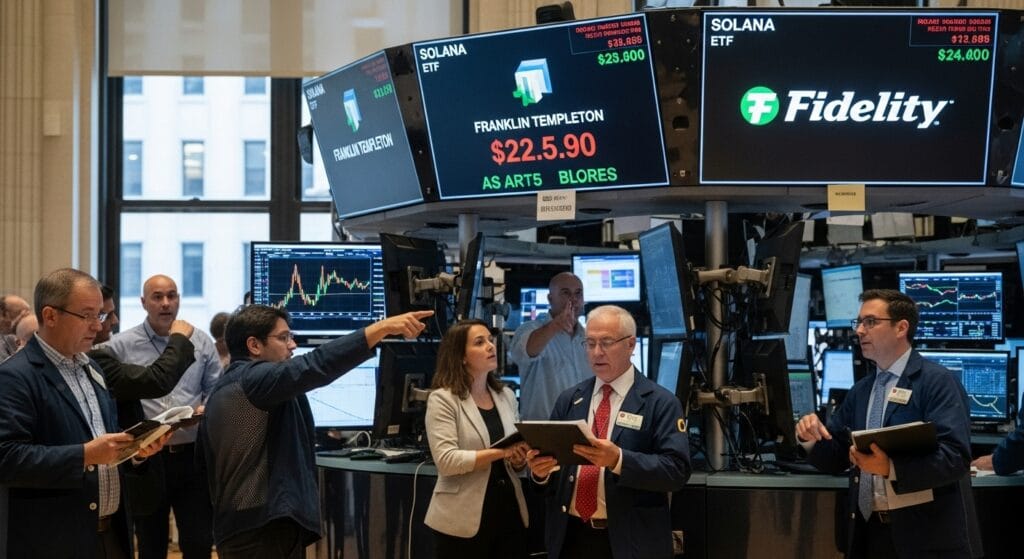
There’s a quiet hum in the air, a subtle shift in the regulatory winds that even the most seasoned crypto watchers are starting to feel. It’s not a sudden gale, mind you, but more like a steady breeze picking up. And right now, that breeze seems to be nudging Solana, the fast-moving blockchain, closer to a significant milestone: a spot exchange-traded fund, or ETF.
- The SEC’s changing stance under President Trump’s administration suggests a friendlier approach to crypto assets. This shift is evident in recent approvals and regulatory updates.
- Major financial players like Franklin Templeton and Fidelity are updating paperwork for Solana ETFs, signaling serious intent. They are refining details in response to SEC feedback.
- SEC Chair Paul Atkins stated that “most crypto assets are not securities,” which could reshape how digital assets are regulated. This could make it easier for Solana ETFs to gain approval.

You might recall the excitement, and perhaps a few nervous twitches, when Bitcoin and Ethereum ETFs finally got the nod. Well, it seems the institutional appetite for crypto exposure hasn’t stopped there. A host of major players recently updated their paperwork with the U.S. Securities and Exchange Commission, a move that often signals things are getting serious.


The Paperwork Shuffle
So, who’s in the mix? We’re talking about some heavy hitters in the financial world. Franklin Templeton, Bitwise, Fidelity, Canary Capital, CoinShares, Grayscale, and VanEck all recently filed amendments to their S-1 registration statements. Think of an S-1 as a company’s formal declaration to the SEC that it wants to offer securities to the public. Amending it means they’re refining the details, perhaps in response to feedback from the regulators.
These aren’t just minor tweaks. They’re part of a back-and-forth, a dance between the firms and the SEC. Nate Geraci, who heads NovaDius Wealth, pointed this out quite plainly. He noted on X that these changes show “dialogue w/ SEC and issuers are refining prospectus language.” It’s a sign of active engagement, not just a shot in the dark.
One interesting detail emerged from Grayscale’s filing. They plan to charge a 2.5% fee for their Solana fund. And here’s the kicker: it’s payable in SOL, Solana’s native token. That’s a bit different from the usual cash fees you see with traditional funds. It means they’ll be taking a slice of the actual asset, which could have its own ripple effects on the market.
What does this mean for you, the curious reader? Well, it suggests these firms are serious. They’re putting in the work, adjusting their proposals to meet the SEC’s requirements. It’s a step, albeit a small one, towards potentially opening up Solana to a much wider pool of traditional investors. Imagine being able to buy Solana exposure through your regular brokerage account, without having to worry about wallets, private keys, or the sometimes-tricky world of crypto exchanges.
A Shifting Regulatory Tide
The bigger picture here is the changing mood at the SEC itself. For a long time, the agency seemed to view most crypto assets with a skeptical eye, often labeling them as unregistered securities. This created a lot of uncertainty, making it tough for traditional finance to fully embrace digital assets.
But things are looking different under President Trump’s administration. There’s a noticeable shift towards a friendlier stance. We saw this recently when the SEC approved “in-kind redemptions” for spot Bitcoin and Ethereum ETFs. This means investors can redeem their ETF shares for the actual underlying crypto, rather than just cash. It’s a technical point, but it shows a growing comfort level with how these funds operate.
Then came a truly significant development. SEC Chair Paul Atkins recently unveiled “Project Crypto.” The stated goal? To update the agency’s rules and regulations, with a particular focus on on-chain activities. This sounds like a move towards clarity, which is something the crypto world has been yearning for.
And the biggest news from Chair Atkins? He publicly stated that “most crypto assets are not securities.” This directly contradicts previous SEC positions. It’s a statement that could reshape how many digital assets are regulated in the United States. If a crypto asset isn’t a security, it falls under different regulatory frameworks, potentially making it easier for funds like these Solana ETFs to gain approval.
This shift isn’t just about Solana, of course. The SEC is weighing dozens of other crypto fund proposals. We’re talking about products that would track assets like XRP and even meme coins like DOGE. It’s a sign that the agency is grappling with the sheer breadth of the crypto market, and perhaps, acknowledging its staying power.
What Comes Next for Solana and Beyond
So, where does this leave Solana? The amended filings and the SEC’s changing tone certainly paint a more optimistic picture. An approved Solana ETF would be a huge vote of confidence from traditional finance. It would likely bring in more capital, increase liquidity, and potentially stabilize the asset’s price by making it accessible to a broader investor base.
But it’s not a done deal. The SEC’s process can be slow, and there are always more questions to answer, more details to iron out. These amended S-1s are a step, but they aren’t the finish line. Think of it like a long road trip. We’ve passed a few important towns, but the destination is still a ways off.
The broader implications are worth considering too. If Solana ETFs get the green light, it sets a precedent. It suggests a path forward for other crypto assets to gain similar institutional products. We could see a wave of new ETFs for various tokens, each bringing its own flavor of institutional interest and investor access.
This evolving landscape is a testament to the persistent growth of digital assets. What was once a niche interest for tech enthusiasts and early adopters is steadily becoming a recognized asset class. The regulatory environment is slowly, sometimes painfully, catching up. And for Solana, these recent filings are a clear signal that it’s firmly in the spotlight for the next round of institutional adoption.