




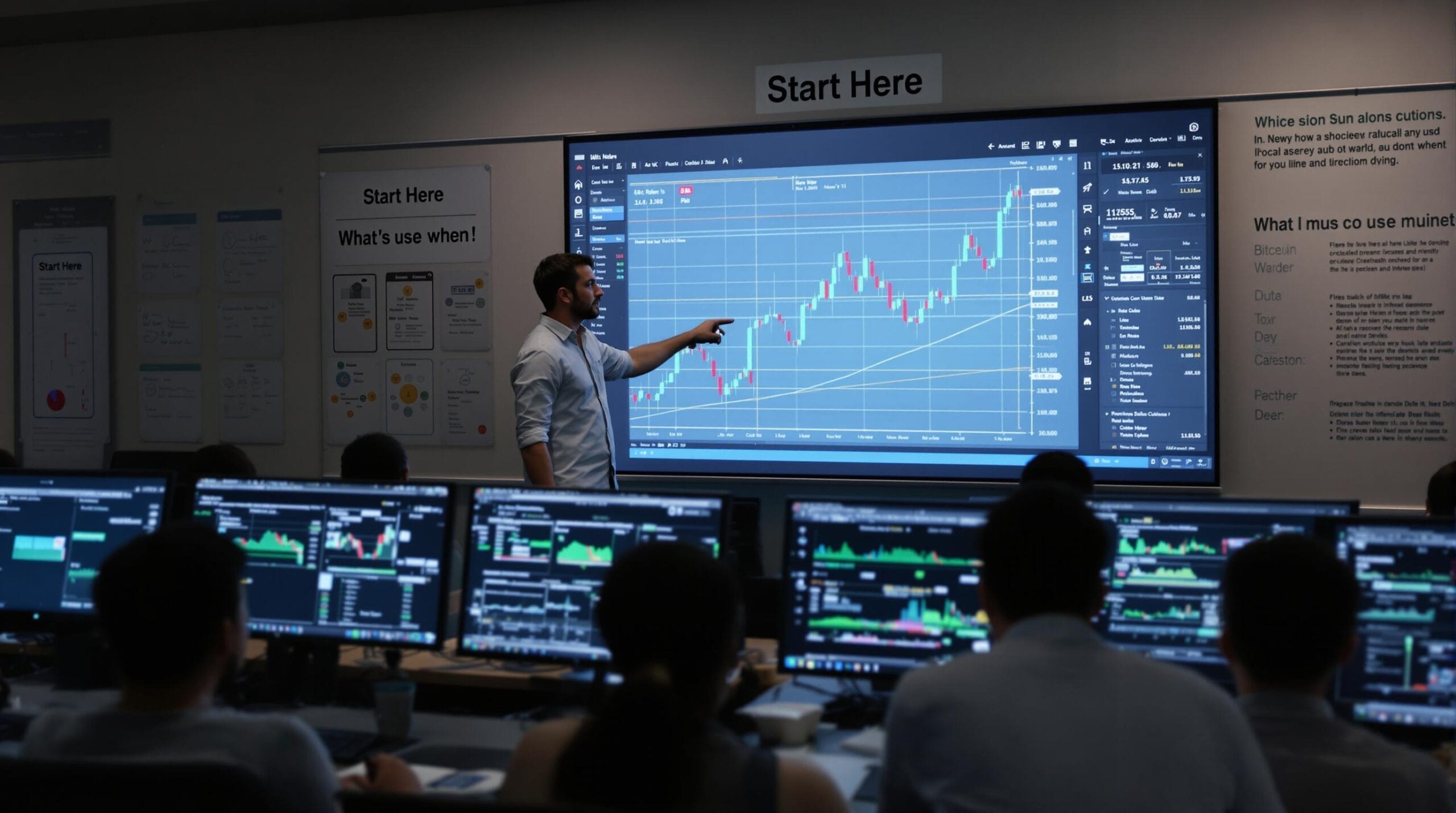
Bitcoin trading can feel like a guessing game. Prices jump. They fall. It seems random. But traders use tools. These tools help them make sense of the market. One popular tool is the Bitcoin candlestick chart. It offers a simple way to see what is happening. It shows market sentiment and trends.
- Bitcoin candlestick charts are a tool used by traders to understand market sentiment and trends.
- These charts, originating from 18th-century Japan, display price movements over time, helping traders make informed decisions.
- By understanding bullish and bearish patterns, traders can plan their trades and gain a clearer view of the market.

Candlestick charts are not new. A rice trader named Honma Munehisa invented them. This was in Japan, way back in the 18th century. They came to Western markets much later, in the 1980s. So, this isn’t some new crypto invention. It’s a proven method, adapted for digital assets.
These charts help you understand bullish and bearish patterns. This knowledge starts you on the path to Bitcoin trading. But remember, they are just one tool. Combine them with other indicators. Moving averages (MAs) or the Relative Strength Index (RSI) are good choices. They give a fuller picture.
Are you new to Bitcoin trading? You might wonder when to buy or sell. Candlestick charts, like bar or line graphs, show time on the horizontal axis. Price data appears on the vertical axis. They offer a quick look at price movements. You can quickly see the highest and lowest prices of an asset. They also show the opening and closing prices for a specific time.


This guide will help you get started. No experience is needed. This is your go-to tutorial for crypto candlestick charts. It is perfectly suited for beginners. So, what exactly are Bitcoin candlestick charts, and why do traders use them?
Why Look at Bitcoin Charts?
Technical analysis is a solid strategy for trading markets. When Bitcoin started picking up, prices moved a lot. Crypto investors began to use trading strategies from traditional markets. Candlesticks were one of these. They help make sense of the price action.
For Bitcoin technical analysis, platforms like TradingView offer many charts. They also have technical indicators. These tools are easy to use. Even beginners can pick them up quickly. TradingView crypto charts can be candlestick, bar, or line charts. Candlesticks are often the first step. They are a good place to start.
Understanding these charts helps you make better decisions. It removes some of the guesswork. It gives you a framework. You can see patterns. You can spot trends. This helps you plan your trades. It is a way to look at the market with clearer eyes.
Why should you spend time analyzing Bitcoin price charts? The market moves fast. Prices change constantly. Without a way to track these changes, you are flying blind. Charts provide a visual history. They show you where the price has been. This helps you guess where it might go next.
It is like looking at a map before a long journey. You see the roads. You see the turns. You see the hills. This map helps you prepare. Bitcoin charts are your map for the market. They show you the terrain. They show you the path.
Beginner’s Guide to Bitcoin Candlestick Charts
Candlestick charts are a milestone in technical analysis. They are the first step to understanding Bitcoin charts. They are a simple tool. They quickly assess price movements. They show short-term market trends. This makes them very useful for traders.
They represent Bitcoin’s price trends on a chart. This happens over a specific period. This could be one hour, four hours, or one day. This helps traders make better decisions. It gives them a clear snapshot of the market’s mood.
Why use candlesticks? They help traders see price movements over time. They help identify market sentiment. Is it bullish? Is it bearish? Or is it just moving sideways? They also help spot patterns. These patterns can be reversals or continuations. This helps predict future price movements. It is like reading the market’s mind.
A candlestick represents four key price points. The opening price is at the start of the period. The closing price is at the end of the period. The highest price is what it reached during the period. The lowest price is what it hit during the period. These four points tell a complete story for that time frame.
A candlestick has a body. This is the bulky part. It sits between the open and close prices. It is green when the price goes up. This is a bullish move. The closing price is higher than the opening price. It is red when the closing price is lower than the opening price. This is a bearish movement. The price goes down.
The body size matters. A long body shows strong buying or selling pressure. A short body indicates uncertainty. It means buyers and sellers are not sure. They are in a standoff. This simple visual cue tells you a lot about market conviction.
A candlestick also has wicks, or shadows. These are thin lines. They extend above and below the body. They show the highest or lowest prices the asset hit. This happens during the relevant trading frame. They tell you the full range of price action. They show how far the price moved, even if it didn’t close there.
Here’s an example. Suppose you’re looking at a four-hour chart. Bitcoin’s opening price is $90,000. The closing price is $93,500. The high for that period was $95,000. The low was $88,700. What would that candlestick look like?
The candlestick would have a green body. It would stretch from $90,000 to $93,500. There would be an upper wick. It would reach up to $95,000. A lower wick would dip down to $88,700. This single candle tells you the whole story of those four hours.
Advantages of Bitcoin Candlestick Charts
Bitcoin candlestick charts offer several advantages. They are intuitive. You can quickly grasp market sentiment. They are flexible. You can use them for different timeframes. For example, a one-minute chart works well for scalping. A daily chart is better for long-term investors. This adaptability makes them useful for many trading styles.
Crypto markets are open 24 hours a day. The open and close prices reflect the start and end of the chosen timeframe. This is different from traditional markets. They have set opening and closing times. In crypto, the market never sleeps. Candlesticks capture this continuous action.
They provide a visual story. You see the battle between buyers and sellers. The body shows who won the battle for that period. The wicks show how far the fight went. This visual representation is powerful. It is much easier to understand than just a list of numbers.
How do Bitcoin candlestick charts help traders make better decisions? They simplify complex data. They turn numbers into pictures. These pictures show trends. They show momentum. They show uncertainty. This helps traders react faster. They can spot opportunities. They can avoid risks.
They are also widely used. This means many resources are available. You can find patterns. You can learn strategies. Many traders speak the language of candlesticks. This common understanding helps in discussing market moves. It builds a shared view of the market.
Beyond the Basics: Advanced Charting Tools
Candlesticks are a great way to start trading Bitcoin. They give you a quick look at market trends. They help predict price movements. Once you know the basic charts, you can explore advanced techniques. Using moving averages, for example, can help you make better investing decisions. They smooth out price data. They show the average price over time.
Here are some of the best tools Bitcoin traders use. They help with technical analysis. They look at volume and market psychology. These strategies give traders an edge. The crypto market changes fast. These tools help keep up.
What are some advanced crypto charting techniques for trading BTC?
1. Fibonacci Retracement
Fibonacci retracement is a technical analysis tool. It spots potential support and resistance levels. It also helps find price targets. To use this method, draw lines. Connect a major high and a major low on the chart. Then, calculate retracement levels. Use Fibonacci ratios. These are 23.6%, 38.2%, 50%, and 61.8%. You can use Fibonacci retracement for confirmation. Pair it with trendlines or moving averages. It adds another layer of insight.
2. Volume Profile
Volume profile is another tool for technical analysis. It shows trading volume for price, not time. Knowing where trading happens most helps traders spot key price levels. These levels often create strong support and resistance zones. It shows you where the most action is. This can be very telling. It highlights areas of strong interest from traders.
3. Elliott Wave Theory
The Elliott Wave theory is a prediction model. It looks at price movements. It is based on market psychology and wave patterns. The theory says the market moves in trends of five waves. These are followed by three waves of correction. Each wave reflects trader sentiment. It is a way to understand the rhythm of the market. It suggests that market moves are not random. They follow a certain flow.
4. Other Indicators
The Relative Strength Index (RSI) is a common charting indicator. It measures the strength of Bitcoin’s upward and downward price movements over time. It tells you if an asset is overbought or oversold. This can signal a potential reversal. It is a momentum oscillator. It helps gauge the speed and change of price movements.
The Simple Moving Average (SMA) indicates the average price of an asset over time. This helps you understand Bitcoin’s overall price movement. It smooths out price fluctuations. It shows the general direction of the trend. It is a basic but powerful tool for trend identification.
The Exponential Moving Average (EMA) is often a better alternative to the SMA. It is good for identifying short-term trends. Like the SMA, the EMA shows you the average price of an asset over time. But the EMA focuses more on recent days. It gives more weight to the latest price data. This makes it more responsive to new information.
What are the key differences between SMA and EMA for Bitcoin trading? The SMA treats all data points equally. The EMA gives more importance to recent prices. This means the EMA reacts faster to price changes. For short-term traders, this responsiveness can be a big advantage. It helps catch new trends earlier.
How can combining these indicators improve Bitcoin trading decisions? Using multiple tools gives you different perspectives. Candlesticks show immediate price action. Moving averages show trends. RSI shows momentum. Fibonacci shows potential levels. When these tools confirm each other, your confidence grows. It reduces reliance on a single signal. This leads to more informed choices.
Caution! Reading Bitcoin candlesticks or any other charts is a great first step. It helps you understand market behavior. But remember, charts don’t guarantee outcomes. The market can be unpredictable. Always combine technical insights with smart risk management. Never trade more than you can afford to lose. That is the most important rule.