




Walk into any café these days, and if the conversation drifts to blockchain, chances are someone will mention BlackRock. They are the big players, moving billions in tokenized money market funds. It feels like traditional finance has finally woken up to crypto, but perhaps on its own terms.
- Bitfinex Securities is challenging the status quo by tokenizing real-world assets and making finance accessible to a wider audience.
- The company is launching new tokenized equity issuances, including products focused on community banking debt and litigation financing.
- Bitfinex Securities aims to bridge the gap between those who need capital and those who can provide it, often in areas underserved by traditional finance.

Yet, the original promise of crypto was always about something more. It was about opening doors, making finance accessible to everyone, not just the giants. That spirit, it seems, is still very much alive at Bitfinex Securities.
They are not just dabbling in real world assets, or RWAs. They are leaning into the idea that tokenization can bridge gaps, reaching places where traditional banks often fear to tread. Their latest moves in the UK certainly prove this point.
Bitfinex Securities just announced two new alternative finance products, both tokenized equity issuances. One tackles community banking debt. The other dives into litigation financing, a space many of us might not even consider for investment.


Bridging Capital Gaps
Let’s talk about TITAN1 first. This product will allocate 5 million British pounds, which is about $6.8 million, into something called subordinate debt. It is for Castle Community Bank, a firm doing important work in Edinburgh, Scotland.
Castle Community Bank helps financially excluded customers get loans. Think about that for a moment. This isn’t about funding another tech startup. It is about supporting a bank that serves people who might otherwise be left behind by the mainstream financial system.
Investors in TITAN1 are looking at a 20% dividend each year, after fees. This dividend gets paid quarterly for up to ten years. For the first five years, the provisions are non-callable, meaning the bank cannot repay the debt early.
Then there is TITAN2. This one is a bit different, but just as interesting. It will invest a hefty 100 million British pounds, roughly $136 million, into litigation financing. Specifically, it targets claims related to mis-sold car finance in the UK.
This market, we are told, could generate billions in compensation. Investors in TITAN2 will receive a 50% share of the claims recovery proceeds. This share is split proportionately among all investors.
Both TITAN1 and TITAN2 are accessible as tradable tokens. You can find them on Bitfinex Securities’ secondary market. This means investors get liquidity, the ability to buy or sell their stake, which is a key benefit of tokenization.
The tokens themselves live on the Liquid Network. This is a sidechain of Bitcoin, developed by Blockstream, a technology firm. Transfers on Liquid require issuer authorization, and a whitelist system ensures compliance and meets jurisdictional rules. It is a controlled environment, but one built on Bitcoin’s foundation.
A Different Path to Tokenization
It is easy to think that tokenized real world assets are a brand new concept, something only big institutions like BlackRock or Franklin Templeton are just now exploring. But Bitfinex Securities was doing this years ago.
They started with niche products, like a tokenized Bitcoin mining hashrate contract linked to Blockstream. Imagine investing directly in the power that secures the Bitcoin network. That was an early offering.
They followed that with various bond issuances. One notable example was the first tokenized U.S. Treasuries offering in El Salvador. This brought T-Bill investments to individuals and organizations who previously could not access them. It is a quiet revolution, making traditional assets available to a wider audience.
Jesse Knutson, who heads operations at Bitfinex Securities, has a thoughtful view on the current tokenization trend. He sees it as a way to connect people who need capital with those who can provide it.
“We want to be able to help people bridge that gap to investors,” Knutson said in a recent interview. He explained that this applies whether it is a company or a bond issuance. It is about raising capital and filling a void.
That void, he suggests, is often left by banks in many parts of the world. These banks are simply not willing to lend, or people struggle to get access to capital through traditional channels. This is where tokenization can step in.
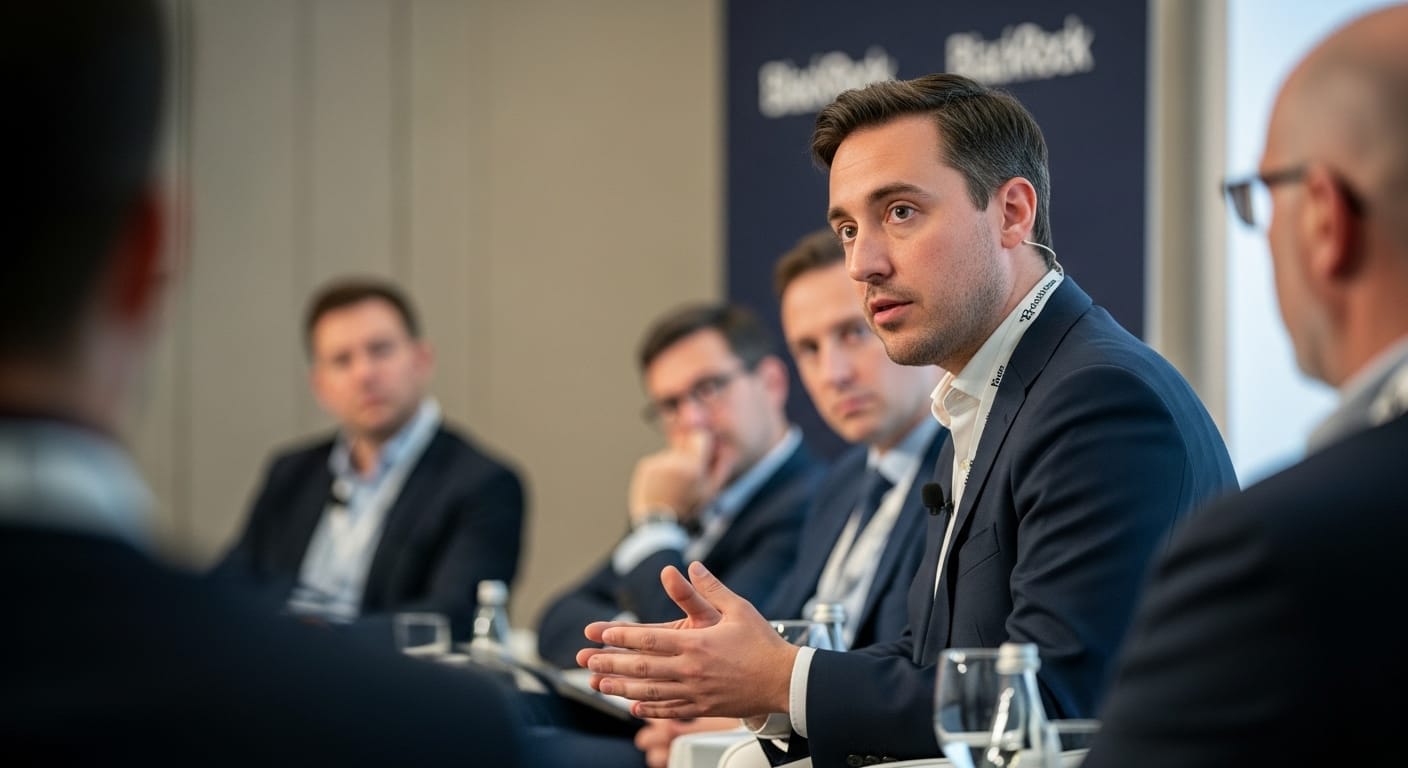
Knutson recently spoke on a digital assets panel in London, sharing the stage with folks from BlackRock and UK asset manager Schroders. He noted a bias in the current ecosystem, especially towards fixed income.
Most of the focus, he observed, is on money market funds. People tend to buy and hold these for a yield, so there is not much trading activity. It is a bit like buying a savings bond and just letting it sit.
But Knutson believes something bigger is at play. “A big part of this is about disintermediation,” he stated. He thinks the institutional players do not quite grasp this point. Disintermediation means cutting out the middlemen.
When you look at the details of what these larger institutions have done, Knutson suggests it is often just moving money from one hand to the other within the same old system. “It’s typically left hand to right hand,” he said.
He pointed out that these processes still go through depositories and transfer payment agents. These are all normal parts of the traditional ecosystem. But, he believes, they are not technologically necessary in a tokenized world.
This perspective offers a quiet challenge to the prevailing narrative. Is tokenization just a new wrapper for old finance, or can it truly change how capital flows? Bitfinex Securities seems determined to show us the latter.
They are not just tokenizing assets. They are tokenizing access, bringing opportunities to investors and capital to those who need it most, often in overlooked corners of the financial world. It is a different kind of RWA story, and one worth watching closely.