




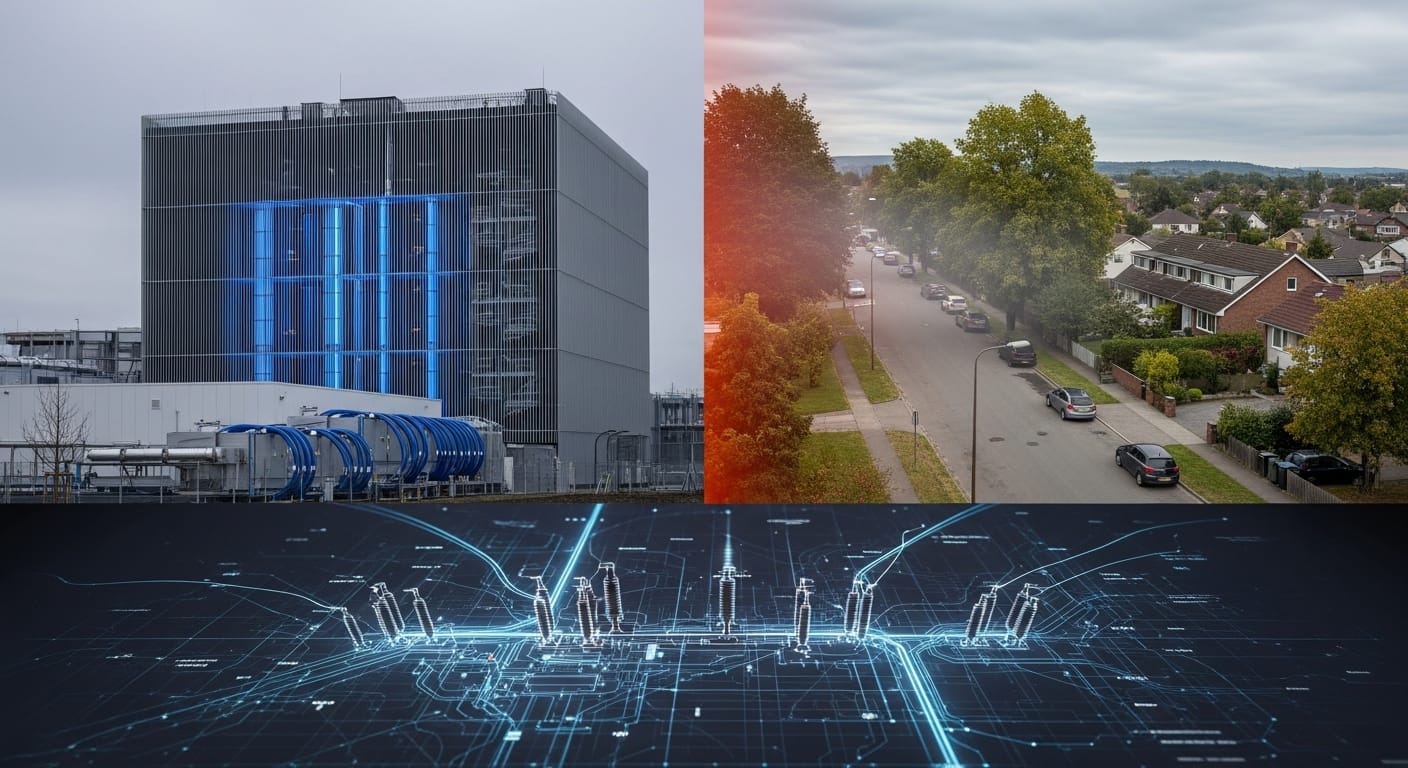
AI isn’t just knocking at the door anymore. It’s already moved in, set up shop, and is reshaping everything around us. Think about it. Hospitals, the military, even your local grocery store, will soon weave AI into their daily operations. This isn’t some far-off sci-fi dream. It’s happening now, and it means the very foundation AI rests upon matters more than ever.
- AI’s rapid growth demands more energy, straining current infrastructure and potentially slowing progress across industries.
- China’s strategic investment in AI, particularly with models like DeepSeek, poses a challenge to the U.S.’s current lead.
- Decentralized systems, powered by renewable energy, offer a more resilient and accessible path for AI development, fostering innovation and security.

Here’s the rub. Our current infrastructure, the silent engine of this AI boom, simply isn’t keeping pace. In 2024 alone, U.S. data centers consumed roughly 200 terawatt-hours of electricity. That’s enough to power a country like Thailand for an entire year. Projections suggest that by 2028, AI’s power appetite could swell to between 165 and 326 terawatt-hours annually. That’s enough to light up nearly a quarter of all U.S. households.
This isn’t just a technical glitch. It’s a choke point. As AI demand climbs, these energy and compute bottlenecks will slow down progress across every industry. It’s like having a Ferrari but only a trickle of gas. The car’s potential remains stuck in the garage.

The AI Energy Crunch
The United States holds a lead in AI, for now. But this isn’t a leisurely stroll. It’s a full-on sprint, and China is closing the gap. Their DeepSeek model R1, for instance, is already competing with some of the best U.S. models. This success shows that speed, scale, and efficiency can truly shift the global balance of AI power.


China’s push into AI is well-funded, coordinated, and strategic. If DeepSeek is any sign of their momentum, we might find ourselves further behind than we think. It won’t matter who writes the best algorithms if the U.S. continues to treat infrastructure as an afterthought. We risk losing the very platform AI runs on.
The future of AI, many argue, should stand on freedom, transparency, and trust. Not on surveillance and control. That’s America’s distinct advantage. To keep it, we must tackle the energy crisis AI is creating head-on.
Consider the massive, centralized data centers we rely on today. They feel a bit like dinosaurs in this fast-moving landscape. They’re rigid, costly, and tied to one spot. Even worse, they create single points of failure. If a power grid goes down or overheats in one area, a huge chunk of the country could find itself in a technological dark age. That’s not a resilient system.
A Decentralized Path Forward
By contrast, decentralized systems can truly free our potential. They allow American innovation to grow with agility. Imagine smaller compute clusters, humming away near local renewable energy sources. Think solar, wind, or geothermal power. Or, they could tap into underused compute power sitting idle in homes, on campuses, and within communities. It’s like finding hidden energy reserves right where they’re needed.
Decentralized systems also put American technology in a better position to survive in a world where digital threats are always growing. In times of crisis, or during cyberattacks from bad actors, spreading compute power across many individual nodes ensures continuity. Centralized systems, on the other hand, can collapse entirely.
So, what’s the way forward? It starts with making it easier and more profitable to build distributed infrastructure. We need to look beyond just huge, hyperscale facilities. We should fund federal research and development for distributed computing. This will speed up innovation in both public and private sectors.
To host edge computing, which is powered by local, clean energy, we could open up federal land and institutions. And finally, we must streamline support for next-generation energy sources. Advanced nuclear grids, for example, could help the future grid match the sheer volume of AI energy demand. It’s about building a power system that can keep up.
This approach would cut down on permit delays. It would also help us tap into the hidden value of our nation’s underused assets. Think rural substations or decommissioned industrial zones. Our energy challenge won’t be solved with one magic bullet. But these steps, taken together, offer a strong model for America to lead in AI development.
Beyond the Bottleneck
This shift does more than just fix our energy problem. It reshapes access for everyone. Developers could build AI models independently, without having to ask for compute power from the biggest tech companies. These infrastructure policies would level the playing field. They would allow smaller players to build and deploy advanced AI models, spreading opportunity itself.
AI is poised to shape every society and sector it touches. But ultimately, whoever controls the foundation of AI will determine the values that guide its outcome. We have a choice. We can let foreign powers consolidate that foundation, outstripping our own ability to build. This could entrench centralization, surveillance, and control.
Or, we can use America’s distinct advantage. We can develop our infrastructure at a pace that meets energy demands. This would guarantee resilience, transparency, and freedom. If the U.S. truly wants to lead in AI, we must act with purpose.
We can’t rely on old systems or slow bureaucracy. We don’t need more studies or more panels. If we want to define the future on our own terms, we need to build. And we need to build right now.