




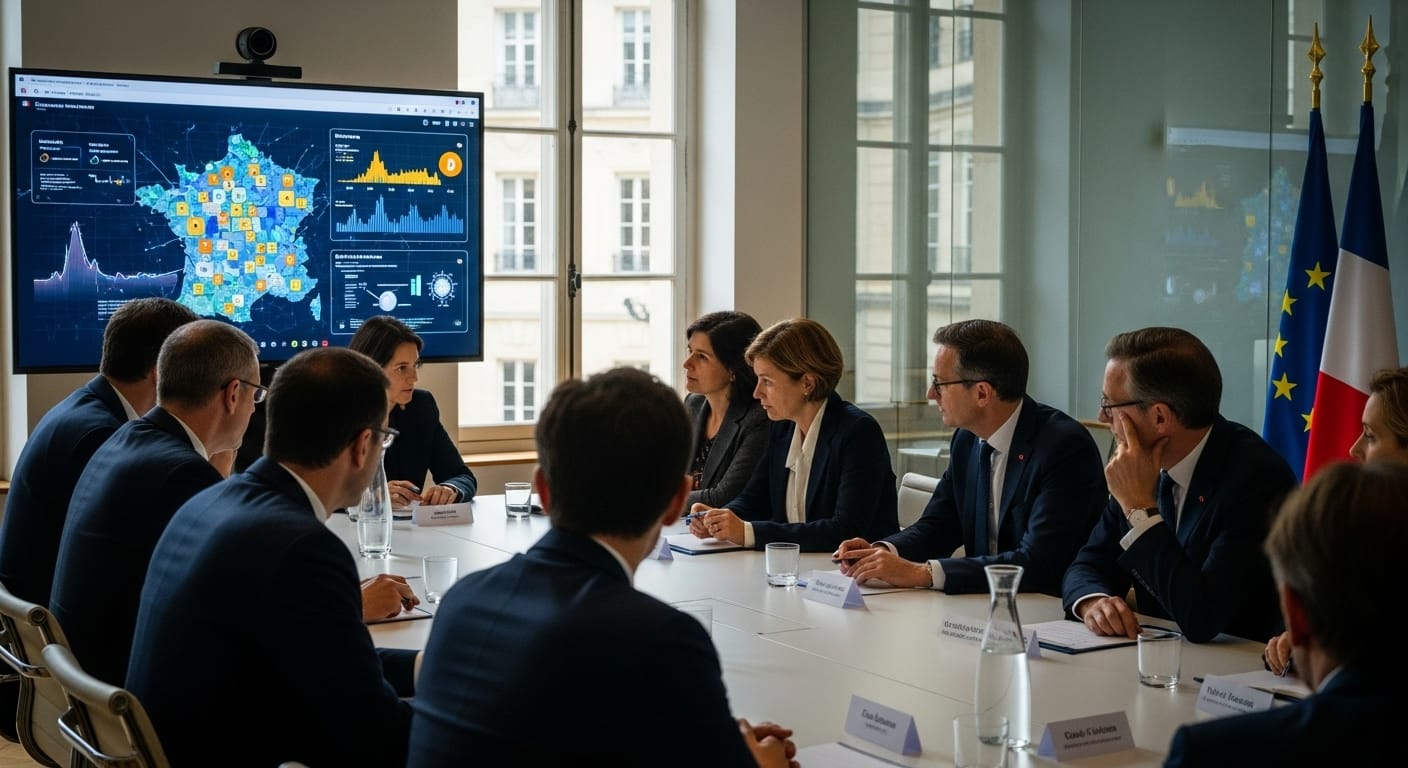
France, a nation known for its grand architecture and even grander nuclear power plants, is quietly exploring a rather unexpected partner for its energy grid: bitcoin mining. It sounds like something out of a futuristic novel, doesn’t it? Yet, lawmakers in Paris have put forward a serious proposal. They want to test a five-year plan to use electricity that would otherwise go to waste, all in the name of digital currency.
- The French government is considering using excess electricity to power bitcoin mining operations. This initiative aims to stabilize the power grid and generate revenue from otherwise wasted energy.
- France’s reliance on nuclear power, coupled with intermittent renewable sources, creates energy imbalances that bitcoin mining could help address. This flexibility allows grid operators to maintain balance without wasting energy.
- The proposal suggests setting up data centers near energy production sites, potentially using abandoned facilities. This approach could generate significant revenue and utilize waste heat for other purposes.

Think about it this way. You have a massive bakery, churning out bread all day. Sometimes, you bake a little too much. You can’t store it forever. You might even have to give it away, or worse, throw it out. That’s a bit like what happens with electricity. Power grids face a constant balancing act. They need to match supply with demand, second by second. When there’s too much power, it becomes a problem.
This initiative, detailed in a bill submitted on July 11, aims to solve this very issue. The goal is clear: make the grid more stable, turn excess power into profit, and ease the strain on France’s nuclear power stations. It’s a clever idea, if it works.
France’s Energy Balancing Act
France relies heavily on nuclear power, a clean and consistent energy source. But even nuclear plants have their quirks. They prefer to run at a steady pace. Renewable sources, like solar and wind, are less predictable. The sun doesn’t always shine, and the wind doesn’t always blow. When renewables surge, nuclear plants are often forced to dial back their output. This process, called modulation, isn’t ideal. It puts wear and tear on the infrastructure, and it means valuable energy is lost.


Lawmakers pointed out that energy producers often sell this overproduced energy at a loss. They have no good way to store it. This creates what they call an “unacceptable economic and energy loss.” It’s like baking too much bread and having to sell it for pennies, or simply tossing it in the bin. No one wants that.
The proposal suggests a way to capture this lost value. Instead of letting the energy go to waste, or straining the grid, why not put it to work? This is where bitcoin mining enters the picture. It’s an energy-intensive process, yes, but it’s also incredibly flexible. Miners can turn their machines on and off quickly, responding to grid needs.
The bill states, “In short, bitcoin mining is an innovative use, capable of converting a problem (unused surplus) into an economic opportunity.” It’s a neat summary, isn’t it? Taking something seen as a burden and flipping it into a benefit. It shows a different way of thinking about energy consumption.
Bitcoin Mining: A New Kind of Sponge
So, how does bitcoin mining help? Imagine it as a giant, digital sponge. When there’s too much electricity on the grid, the sponge soaks it up. When demand is high, and power is scarce, the sponge can be squeezed out, or simply turned off. This flexibility is key. It allows the grid operators to maintain balance without wasting energy or damaging equipment.
The French proposal envisions setting up data centers, filled with bitcoin mining computers, right next to energy production sites. They might even use abandoned factories or other unused facilities. This strategy aims to create significant benefits without taking away from the existing energy supply for homes and businesses. It’s about using what’s extra, not what’s needed.
The economic upside is also quite compelling. The Association for the Development of Digital Assets, known as ADAN, provided some interesting figures. Lawmakers cited ADAN’s estimate that dedicating just one gigawatt of power to mining could generate between $100 million and $150 million in annual revenue. That’s a substantial chunk of change from what was once considered waste.
Beyond the direct revenue, there’s another clever angle: heat. Bitcoin mining computers work hard, and like any hard-working machine, they produce a lot of heat. Normally, this heat is just dissipated into the air, a byproduct with no use. But what if you could capture it?
Beyond the Grid: Warming Homes and Greenhouses
The French proposal highlights this very point. “Another advantage of bitcoin mining is the production of heat, generally considered waste, which can be recovered,” the bill explains. It suggests that this heat can be captured using heat exchangers. Think of it like a giant radiator, but instead of heating a single room, it could warm entire buildings. Or, perhaps, agricultural greenhouses.
Imagine a farm where the warmth needed for growing tomatoes in winter comes from the hum of bitcoin miners next door. Or an industrial process that requires constant heat, now powered by what was once discarded energy. This isn’t just theory. Lawmakers noted that this approach to energy efficiency is already in practice in places like Iceland, Norway, and Sweden. These countries, with their abundant renewable energy, have shown that the method is technically sound.
If this bill passes, France could position itself as a significant player in the crypto asset space. It’s a bold move, marrying traditional energy infrastructure with the cutting edge of digital finance. It also challenges some common ideas about bitcoin mining, showing it not just as an energy consumer, but as a potential solution for energy management.
It’s a fascinating pivot, isn’t it? From energy waste to economic opportunity, all powered by the very technology many once viewed with suspicion. It makes you wonder what other unexpected partnerships might emerge as the world grapples with energy challenges and digital innovation.