




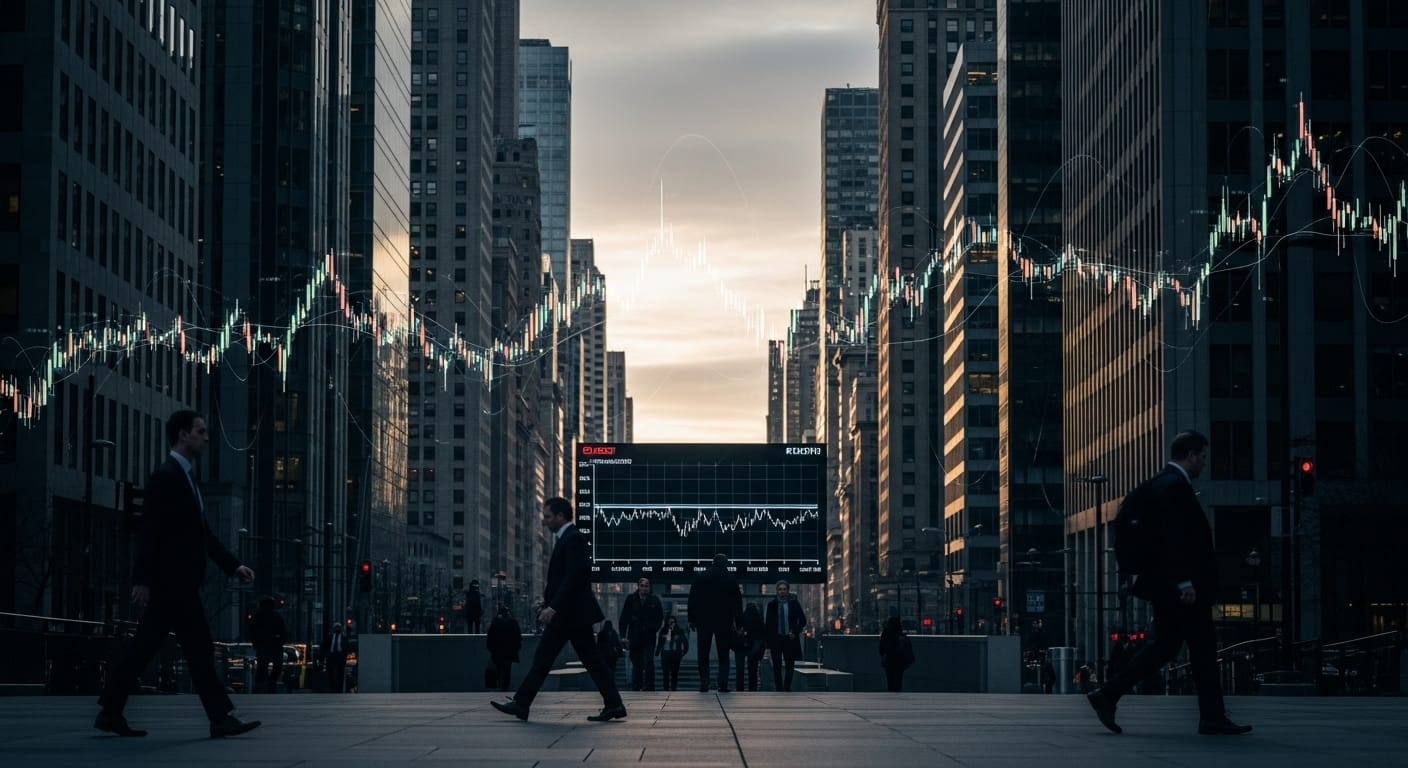
A strange quiet has settled over the markets. It’s like the world’s financial instruments decided to take a collective nap. This calm feels pervasive, stretching across everything from Bitcoin to gold, even the big government bonds.
- Markets are experiencing a widespread drop in volatility across major assets like Bitcoin, gold, and bonds, reaching multi-year lows. This calm is occurring as central banks, particularly the Federal Reserve, are expected to cut interest rates from a position of strength.
- The market anticipates rate cuts, with CME’s FedWatch tool suggesting a 25 basis point reduction in September. This expectation, coupled with a stable economic outlook, is contributing to the current low volatility.
- Some contrarians view the vanishing volatility as a sign of market complacency, pointing to potential headwinds like trade tariffs and sticky inflation. They warn that asset prices may have outpaced future economic realities, suggesting a need for caution and hedging.
Traders are watching Federal Reserve Chairman Jerome Powell. His speech at the annual Jackson Hole Symposium, set for August 21-23, looms large. Everyone wants to know what he’ll say, and this anticipation seems to have drained the usual market jitters.

Take Bitcoin, for example. Its 30-day implied volatility, a measure of how much its price is expected to jump around, has dropped. Volmex’s BVIV and Deribit’s DVOL index show it near two-year lows. Last week, it hovered around 36%, according to TradingView data.
Gold, that old safe haven, tells a similar story. The CME Gold Volatility Index, or GVZ, tracks the expected 30-day volatility for the SPDR Gold Shares ETF. It’s more than halved in the past four months. It now sits at 15.22%, its lowest point since January.


Even the bond market feels this stillness. The MOVE index, which tracks 30-day implied volatility for Treasury notes, has also fallen. It hit a 3.5-year low of 76% recently.
And then there’s the VIX, often called Wall Street’s “fear gauge.” It dropped below 14% last week. That’s a big change from its early April highs, which were near 45%. You can see this same squeeze in volatility across major foreign exchange pairs, like the EUR/USD.
Why the Calm?
This widespread drop in volatility across major assets isn’t happening during a crisis. That’s the interesting part. Instead, it comes as central banks, especially the Fed, are expected to cut rates. They are cutting from a position of strength, not desperation.
An observer known as Endgame Macro, writing on X, explained this shift. “Most major economies are not easing from ultra-low or emergency levels like we saw after the financial crisis or during COVID,” they noted. “They’re cutting from restrictive territory, meaning rates are still high enough to slow growth, and in many cases, real rates, adjusted for inflation, are still positive.”
This is a big change from past easing cycles, Endgame Macro added. It shapes how the next phase plays out, supporting the current bull run in assets like cryptocurrencies and stocks.
The market seems to agree. The CME’s FedWatch tool suggests the Fed will cut rates by 25 basis points in September. This would restart the easing cycle after an eight-month pause. It’s like the market is holding its breath, waiting for the official signal.
JPMorgan, the investment banking giant, has its own forecast. It expects the benchmark borrowing cost to fall to 3.25%-3.5% by the end of the first quarter of 2026. That’s a 100-basis-point decrease from the current 4.25%.
Some observers believe Powell could use his Jackson Hole speech to prepare the ground for these new rate cuts. It’s a subtle art, hinting at future moves without causing a stir.
Angelo Kourkafas, a senior global investment strategist at Edward Jones, shared his thoughts in a recent blog post. “The path to rate cuts may be uneven,” he said. “We have seen over the last two years, where markets have been eager for rate cuts and sometimes disappointed that the Fed has not delivered them.”
But Kourkafas believes the direction for rates is likely lower. “With inflation treading water and labour-market strains becoming more pronounced, the balance of risks may soon tip toward action,” he added.
He thinks Powell’s remarks at Jackson Hole could confirm the high expectations. After a seven-month break, rate cuts could indeed resume in September. This widespread belief in easier money and a stable economy likely explains the current low volatility.
Is This Too Calm?
Not everyone is buying into this peaceful outlook. Some contrarians see the vanishing volatility as a sign that markets are too comfortable. They point to potential headwinds that could disrupt this quiet period.
For one, President Trump’s trade tariffs could slow economic growth. Also, recent data suggests inflation might be stickier than many hope. It’s a classic case of looking at the same picture and seeing different things.
Consider the price levels for most assets, including Bitcoin and gold. They are all at record highs. This makes some wonder if the market has gotten ahead of itself, pricing in a perfect future.
Scott Bauer of Prosper Trading Academy voiced this concern last week. During an interview with Schwab Network, he argued that volatility is too low. This is especially true after the latest economic data, with more uncertainty on the horizon, he said.
The idea of market complacency gains strength when you look at bond markets. Corporate bond spreads, which measure the extra yield investors demand for riskier corporate debt over safe government bonds, are at their lowest since 2007.
This prompted analysts at Goldman Sachs to issue a warning to clients. They advised against complacency and suggested taking hedges. It’s like telling someone to pack an umbrella, even if the sky is clear.
“There are enough sources of downside risks to warrant keeping some hedges on in portfolios,” Goldman strategists, led by Lotfi Karoui, wrote in a note dated July 31, according to Bloomberg. They see several clouds on the horizon.
Growth could surprise further to the downside, they warned. Disinflationary pressures might fade. Or, renewed concerns about the Fed’s independence could spark a sharp selloff in long-dated yields. Any of these could shatter the calm.
In the end, volatility tends to return to its average. Periods of quiet often set the stage for more turbulent times. It’s a cycle, and the market rarely stays still for long. The question is, how long will this particular calm last?