




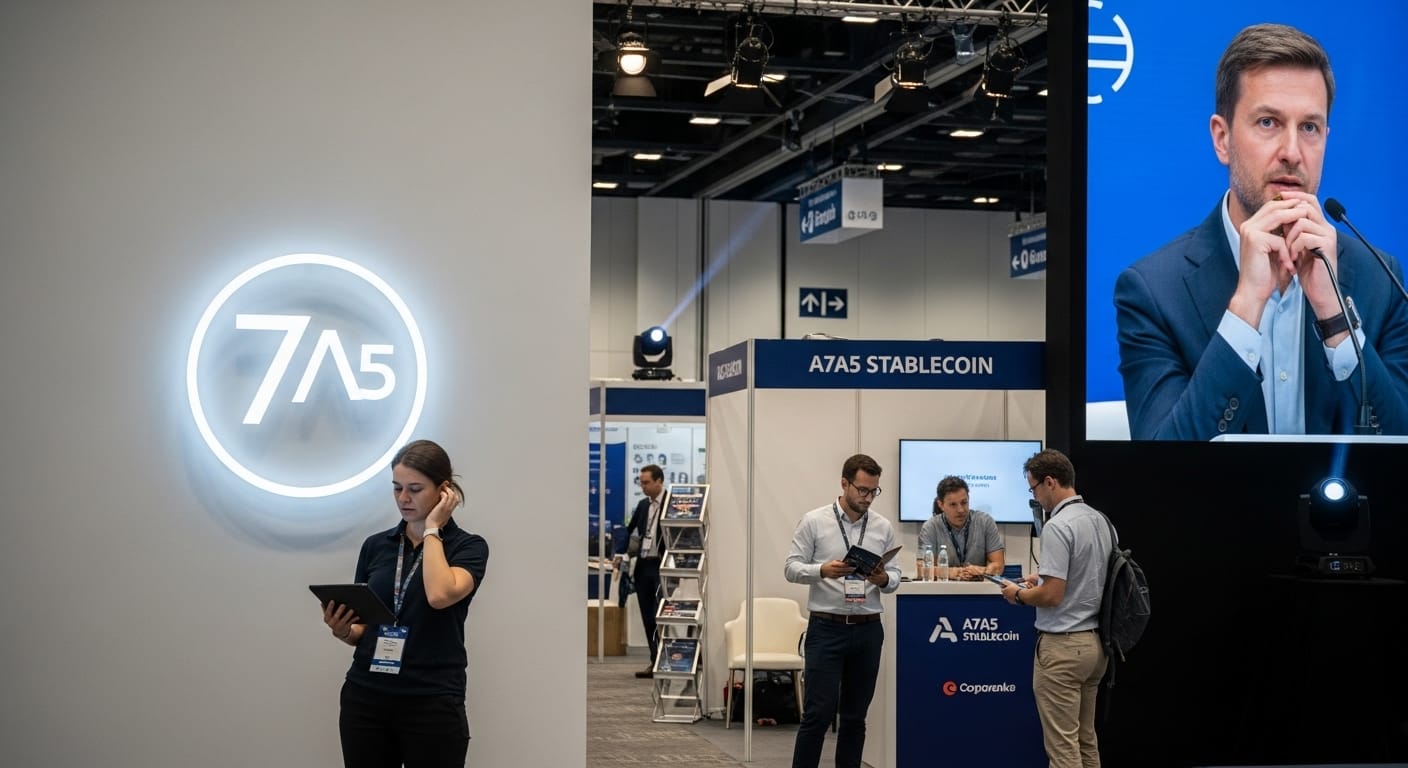
The bright lights of a major crypto conference often draw a fascinating mix of innovators, investors, and, sometimes, a bit of controversy. Token2049, a high-profile event that recently wrapped up in Singapore, found itself in just such a spotlight. It seems the organizers quietly removed all mentions of a particular “platinum sponsor” from their website. This sponsor, a stablecoin project known as A7A5, had a booth, staff, and even a director speaking on stage. The catch? Both the U.S. and the UK had already sanctioned A7A5.
- Token2049 organizers removed mentions of A7A5, a sanctioned ruble-backed stablecoin project, from their website after the U.S. and UK imposed sanctions on it for alleged sanctions evasion.
- Despite sanctions, A7A5’s director spoke at the conference, claiming significant market share and regulatory compliance in Kyrgyzstan, while highlighting risks of USD stablecoins and advocating for a multipolar financial future.
- Blockchain analysis reveals substantial transaction volumes for A7A5, linked to entities like Grinex and potentially high-profile figures, indicating a complex web that regulators are investigating.
Imagine the scene. A bustling conference floor, a project proudly displaying its wares, its director sharing insights on a panel. Then, behind the digital curtain, a swift, silent scrub. Reuters reported this quiet deletion after they reached out to Token2049 for comment. It makes you wonder what conversations were happening in the background, doesn’t it?
The Sanctioned Stablecoin in the Spotlight
A7A5 isn’t just any stablecoin. It’s a ruble-backed project, and its backers caught the attention of some serious regulators. The U.S. Office of Foreign Assets Control (OFAC) sanctioned the entities behind A7A5 back in August. OFAC alleged the token was “created for Russian customers of A7 Limited Liability Company (A7), a Russian firm that provides cross-border settlement platforms used for sanctions evasion.” The UK quickly followed suit, claiming the token was “specifically designed as an attempt to evade western sanctions.”
That’s a strong accusation, suggesting a deliberate attempt to sidestep international financial rules. Oleg Ogienko, A7A5’s director of international development, spoke at Token2049 about the future of stablecoins. He claimed A7A5 holds 44% of the non-USD stablecoin market, boasting a $1.2 billion market cap. Quite a statement for a project under such scrutiny.


When Reuters pressed him, Ogienko admitted, “we were sanctioned several times.” But he pushed back on the money laundering claims. He stated the project is properly regulated by Kyrgyzstan’s virtual-asset regime. It’s worth noting that Singapore, where the conference took place, has not sanctioned A7A5’s backers.
The project’s X (formerly Twitter) account summarized Ogienko’s talk. It said, “USD stablecoins carry wallet-blocking risks based on nationality, which infringes on user rights. The future of finance is multipolar, where regional stablecoins become a real alternative to the digital dollar.” This vision of a “multipolar” financial world, with regional stablecoins challenging the digital dollar, certainly offers a different perspective on global finance.
Tracing the Digital Footprints
The plot thickens when you look at A7A5’s connections. The token has been closely linked to Grinex. Grinex is seen as a successor to Garantex, a Russian-based crypto exchange that OFAC had previously sanctioned and then shuttered. It’s a tangled web, suggesting a pattern of activity that regulators seem keen to untangle.
Researchers at blockchain firm Elliptic have been digging into A7A5’s activity. They told Reuters that a staggering $70.8 billion of A7A5 has been transferred since its launch in January of this year. That’s a significant amount of value moving through a system under a regulatory cloud. Elliptic has also published analysis using leaked documents. This analysis draws links between A7 founder Ilan Shor, the A7A5 stablecoin, and even, allegedly, the president of Kyrgyzstan, Sadyr Japarov. These are serious connections, pointing to a much larger story than just a conference sponsorship.
The swift removal of A7A5’s details from the Token2049 website speaks volumes. It shows how quickly event organizers react when faced with public scrutiny over sanctioned entities. For a conference that aims to showcase the future of finance, having a sanctioned project as a “platinum sponsor” certainly raises eyebrows. It highlights the constant tension between the open, permissionless nature of crypto and the need for compliance in the traditional financial world.
Navigating the Shifting Sands of Crypto Events
This incident serves as a reminder for everyone in the crypto space. Due diligence, even for conference sponsorships, remains paramount. The lines between innovation and regulation are constantly shifting. What might seem like a straightforward partnership can quickly become a reputational challenge.
The crypto world moves fast, and sometimes the regulatory landscape struggles to keep pace. But events like this show that regulators are watching. They are willing to act when they see what they consider to be attempts at sanctions evasion. This creates a challenging environment for conferences and projects alike. Everyone wants to foster growth and innovation, but not at the expense of global financial integrity.
As the crypto industry matures, we will likely see more such situations. Organizers of major events will need to be even more careful about who they invite to the table. The goal, after all, is to build a legitimate and sustainable future for digital assets. That future depends on trust, transparency, and a clear understanding of global rules, even as we push the boundaries of what’s possible.