




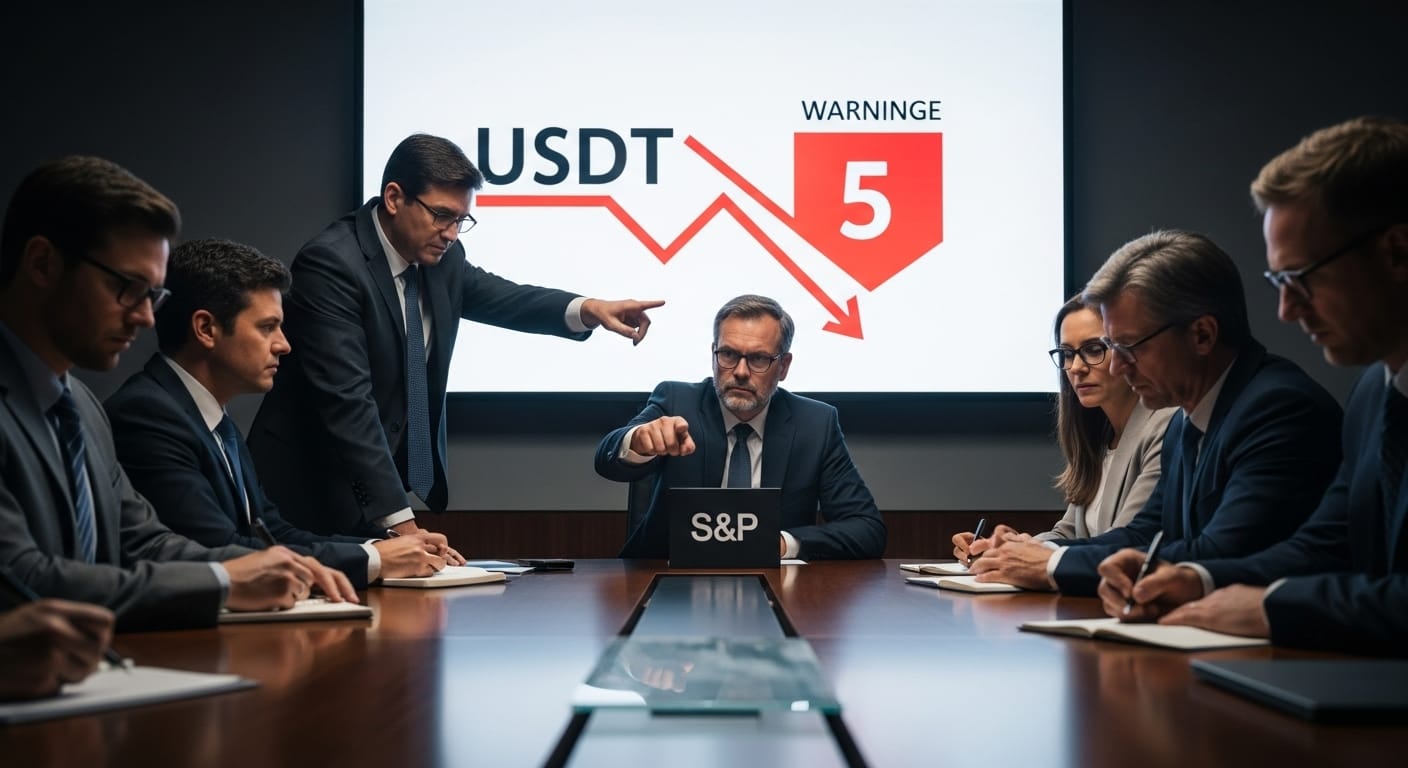
A stablecoin is supposed to be boring. Its whole job is to be a quiet, dependable digital dollar, a safe harbor when the crypto seas get choppy. But the biggest stablecoin of them all, Tether’s USDT, is getting a little less boring. And the old guard of finance is starting to sound the alarm.
- S&P Global Ratings downgraded Tether’s USDT stability score to the weakest possible rating due to increasing exposure to risky assets. Specifically, Tether’s holdings in bitcoin now outweigh its reported safety buffer.
- The primary concern is that a sharp drop in bitcoin’s price could quickly erode Tether’s 3.9% reserve buffer, potentially causing USDT to become undercollateralized and destabilizing the wider crypto economy.
- Tether’s appetite for riskier assets, including bitcoin, gold, and corporate bonds, has expanded from 17% to 24% of reserves over the last year, contributing to the downgrade.
S&P Global Ratings, a name you usually hear tied to countries and corporations, just took a hard look at Tether’s books. They didn’t like what they saw. The agency slashed its stability score for USDT to a 5. On their scale, that’s the weakest possible rating. It’s the financial equivalent of a teacher writing “See me after class” in red ink across your report card.
The reason for the downgrade is simple. Tether’s exposure to risky assets is growing. More specifically, its holdings in bitcoin now outweigh its own safety cushion. It’s a situation that raises a very uncomfortable question. What happens to the world’s favorite stablecoin if the world’s favorite crypto takes a nosedive?
A Cushion Thinner Than Its Bet
Let’s break down the numbers, because they tell the real story. According to S&P, bitcoin now makes up about 5.6% of all the assets backing USDT. Think of it as Tether’s bet on the market. At the same time, Tether’s own reported reserve buffer, the extra capital it holds to absorb losses, is only about 3.9%.


You don’t need a degree in finance to spot the problem. The bet is bigger than the buffer. If bitcoin’s price falls sharply, that 5.6% holding could shrink fast enough to wipe out the 3.9% cushion and then some. If that happens, USDT would become undercollateralized. Each one-dollar token would no longer be backed by at least one dollar’s worth of assets.
This isn’t just a theoretical exercise. A material drop in bitcoin, especially if paired with losses on its other adventurous investments, could break the peg. And a broken peg on a stablecoin of Tether’s size would send shockwaves through the entire crypto economy. It’s the financial plumbing for countless exchanges and traders.
S&P’s concern isn’t just about bitcoin, either. The agency pointed out that Tether’s portfolio of what it calls “riskier assets” has been quietly expanding. This bucket includes not just bitcoin but also gold, secured loans, corporate bonds, and other investments that come with what S&P politely calls “limited disclosure.”
The Widening Risk Appetite
A year ago, these riskier assets made up 17% of Tether’s reserves. As of its last attestation at the end of September, that figure had climbed to 24%. Nearly a quarter of the assets backing the world’s most used stablecoin are now in things that are decidedly not cash or boring government bonds.
To be fair, a huge chunk of USDT’s reserves are still held in short-term U.S. Treasuries. These are about as safe as it gets. But S&P notes that even here, the structure lacks basic protections common in regulated finance. There’s no clear separation of reserve assets from the company’s own operational funds, a practice that prevents a company from dipping into customer money.
Redemption access also remains a point of friction. Getting your dollars back isn’t always as straightforward as it would be with a regulated money market fund. These persistent gaps in transparency and structure contributed to the downgrade, moving the score down from last year’s already unflattering “constrained” assessment.
Despite all this, Tether remains the undisputed king. Its circulating supply is nearly $185 billion. Its closest competitor, Circle’s USDC, has a market cap of less than $75 billion. For millions of users, USDT is the default option. It’s fast, liquid, and available everywhere.
This dominance creates a strange dynamic. The market seems willing to overlook the risks flagged by S&P in exchange for the utility Tether provides. For now, at least.
A Familiar Warning Bell
S&P’s focus on Tether isn’t happening in a vacuum. The ratings agency is clearly growing more concerned about bitcoin-linked risk across the board. It’s applying the same lens to other crypto-heavy companies and finding similar vulnerabilities.
Just last month, S&P assigned a B-minus credit rating to Strategy, the company chaired by bitcoin maximalist Michael Saylor. The rating, deep in “junk” territory, was given for an obvious reason. The company’s balance sheet is almost entirely bitcoin. A sharp price drop would put it in serious jeopardy.
S&P placed Strategy in the same risk bucket as another stablecoin issuer, Sky Protocol. The message is consistent. Any entity whose financial health is overwhelmingly tied to the price of a single, volatile asset faces major liquidity and market shocks. Tether, by increasing its bitcoin allocation, is willingly stepping deeper into that same bucket.
There is a way out of the penalty box. S&P said Tether’s stability score could improve. The recipe is straightforward. Reduce exposure to high-risk assets and provide much fuller disclosures about what’s in the reserves and who is holding it.
Tether has faced years of questions about its reserves, and has so far managed to not just survive, but thrive. It has become a goliath by offering the market something it desperately wants. But the warnings are now coming from the heart of the financial system it seeks to replace. And those warnings are getting harder to ignore.