



Have you ever sat watching the news, listening to two experts argue about whether interest rates will go up or down, and just wished you could know what the world *really* thinks? We get polls and predictions, but they often feel like guesswork. It’s a bit like trying to predict the weather by asking a hundred people to look out their window. You get a lot of opinions, but you’re still not sure if you should bring an umbrella. A major change is coming to how we see the future, and it’s about to show up right on your TV screen.
Key Takeaways
- CNN is partnering with prediction market platform Kalshi.
- Markets saw over $45 billion traded combined recently.
- Kalshi faces a lawsuit alleging unlicensed sports betting.
CNN, one of the biggest names in news, just announced it’s teaming up with a company called Kalshi. Their goal is to add a new tool to the reporter’s toolkit, one that’s very different from a traditional poll. They’re plugging directly into something called a “prediction market.”
So, What on Earth is a Prediction Market?
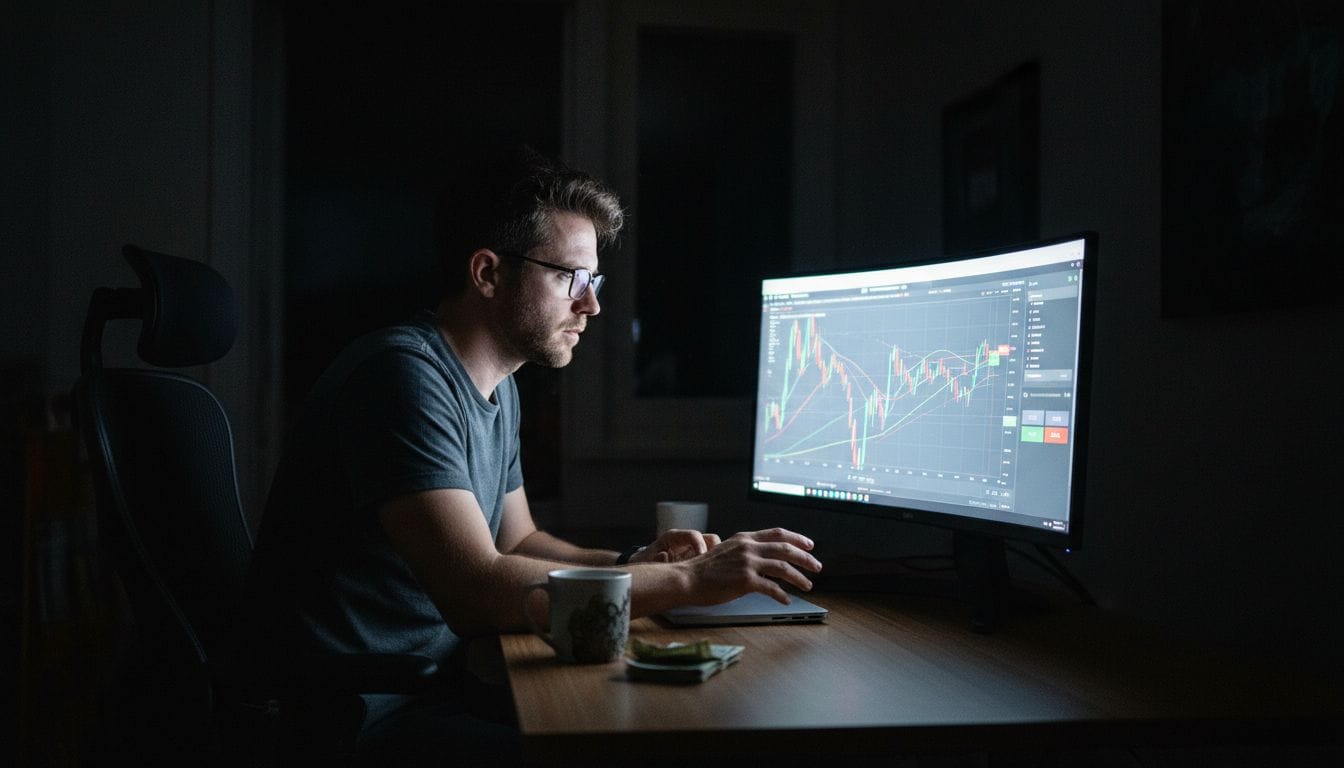
Imagine a stock market, but instead of buying shares in Apple or Ford, you’re buying shares in a future event. It’s a place where people can bet real money on whether something will happen or not.
Let’s use a simple example. Say there’s a market for the question: “Will the next Taylor Swift album be released before December?” You can buy a “Yes” share or a “No” share. If the album comes out before December, every “Yes” share becomes worth one dollar, and every “No” share becomes worthless. If it doesn’t, the “No” shares pay out.


The clever part is the price. The price of a “Yes” share floats between one cent and 99 cents, based entirely on what people are willing to pay for it. If the “Yes” shares are trading at 75 cents, you can think of that as the market giving the event a 75% chance of happening. It’s a real-time, constantly updating poll based on where people are putting their hard-earned cash.
A Poll with Teeth
This is why CNN is so interested. Traditional polls are useful, but they have their limits. They ask people for their opinions, but there’s no cost to being wrong. A prediction market is different. It forces people to have “skin in the game.” You’re not just saying who you *think* will win an election; you’re betting money on it. The theory is that this makes people think a lot harder and more honestly before they place their bet.
CNN plans to weave this data directly into its shows, led by its Chief Data Analyst, Harry Enten. You’ll even see a new real-time ticker on screen during certain segments, showing the live probabilities for everything from political races to economic events. It’s a bit like having a financial news channel for the future itself.
As Kalshi put it in their announcement, they want their data to be a “powerful complement” to CNN’s reporting. They believe they’ve become a key source for anyone wanting to know what’s coming next, from Wall Street traders to regular folks at home.
This Isn’t Just a Niche Hobby Anymore
While the idea might sound strange, it’s catching on fast. Kalshi and its main rival, Polymarket, have seen a combined total of more than $45 billion traded on their platforms. This isn’t just a few people in their basements making bets. Big financial players like Google Finance, Yahoo Finance, and Robinhood have started to show data from these markets.
It’s all part of a growing belief in an idea called “the wisdom of the crowd.” The thinking is that a large group of diverse, independent people, when betting their own money, is often smarter and more accurate at predicting outcomes than any single expert.
Shayne Coplan, the CEO of Polymarket, didn’t mince words in a recent interview with 60 Minutes. He claimed that prediction markets are “the most accurate thing we have as mankind” for forecasting the future.
“[Kalshi] has become the definitive source for staying informed about the future and is used by reporters, politicians, pundits, Wall Street, and Main Street,” the platform said.
But Is It Just Gambling?
Of course, there’s another way to look at all this. If you’re betting money on the outcome of an event, isn’t that just gambling? That’s the question at the heart of a major debate surrounding these platforms.
Kalshi was recently hit with a nationwide class-action lawsuit. The suit accuses the company of running an unlicensed sports betting service. It claims that betting on the outcome of a political event isn’t all that different from betting on the outcome of the Super Bowl. The critics argue that these platforms are simply casinos dressed up in fancy financial language.
The companies, on the other hand, argue they are providing a valuable public service. They see themselves as information exchanges, not bookies. They believe that by creating a financial incentive for people to seek out the truth and make accurate predictions, they are creating a powerful new tool for understanding the world.
For now, the line between an innovative forecasting tool and an online betting parlor remains blurry. But with CNN putting these numbers on millions of television screens, we’re all about to get a front-row seat to the debate. It’s a grand experiment in finding the truth, one dollar at a time.