



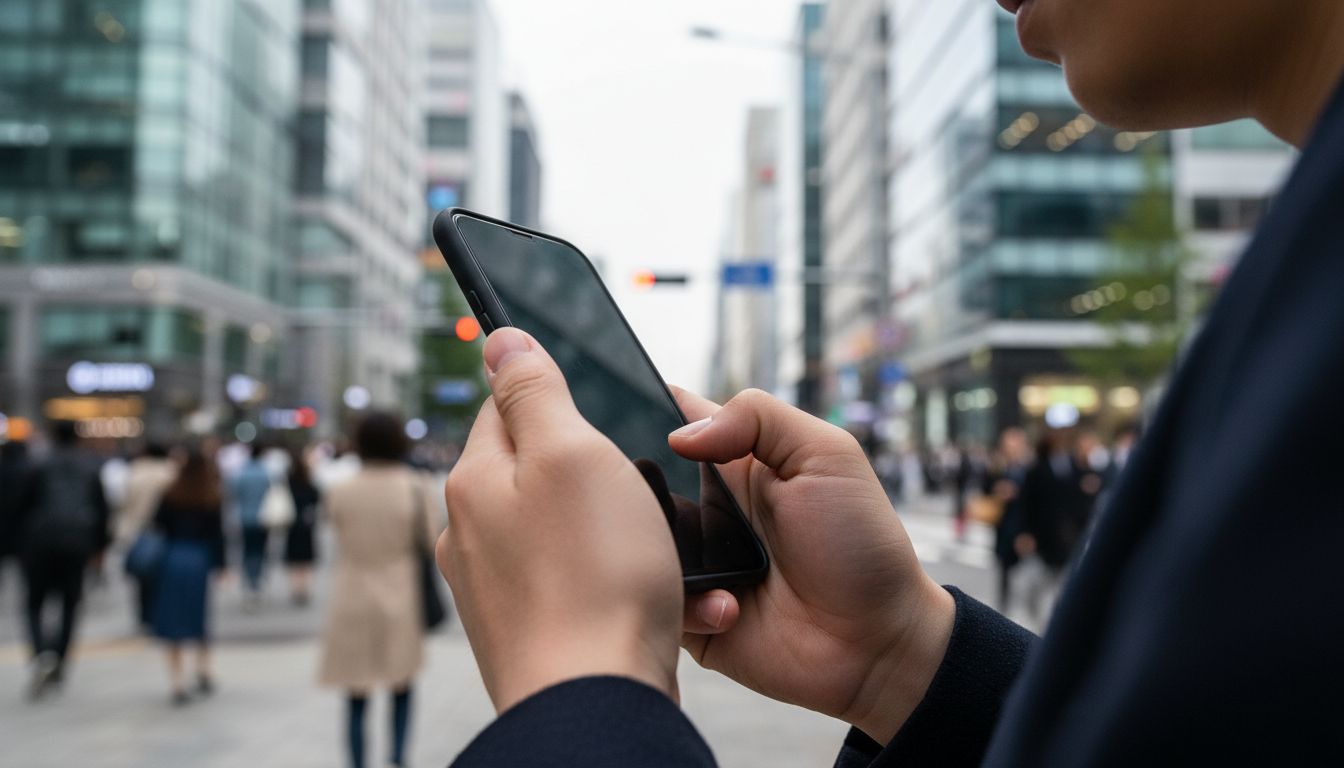
On the morning of January 28, millions of Android users in Seoul might tap the familiar icon for Binance or OKX, expecting the usual dashboard of flashing numbers and trading charts. Instead of a smooth update or a fresh interface, they are going to hit a digital brick wall erected by one of the world’s largest tech companies. It isn’t a server crash or a hacker attack, but a quiet policy shift deep inside the Google Play Store that is about to cut the cord between South Korean traders and the global crypto market.
- Enforcement deadline is January 28 for Android apps in South Korea.
- Only 27 platforms have approval from the Korea Financial Intelligence Unit (FIU).
- South Korea has over 10 million active crypto users.

Google has decided to enforce a strict new rule in South Korea. If a cryptocurrency exchange or a digital wallet provider wants to stay on the Play Store, it must show a specific badge of approval from the Korean government. Without that badge, the app gets evicted. This sounds like a standard bureaucratic procedure, but in practice, it is a massive shake-up that will leave some of the biggest names in the industry out in the cold.
The bouncer at the door
To understand what is happening, we have to look at how apps get to your phone. The Google Play Store acts like a giant, curated supermarket for software. When you walk in, you assume everything on the shelves is safe and approved. Google is now acting like a very strict store manager. They have looked at the crypto apps on their shelves and said, “If you don’t have a license from the Korea Financial Intelligence Unit (FIU), you have to leave.”
The Korea Financial Intelligence Unit is the government watchdog that keeps an eye on money flows to prevent things like money laundering. They are the ones who decide which crypto companies are playing by the rules. Currently, only 27 platforms have managed to get this approval. These are mostly local South Korean companies, like Upbit and Bithumb.


The problem is that many South Korean traders don’t just shop locally. They love the big international “superstores” of crypto, like Binance, Bybit, and OKX. These global giants handle billions of dollars in trades every day, but they are not registered with the Korean FIU. Come January 28, their apps will effectively disappear from the Korean version of the Play Store. You won’t be able to download them, and more importantly, you won’t be able to update them.
Why not just get the license?
You might be asking a sensible question: If these global companies want to keep their Korean customers, why don’t they just fill out the paperwork and get registered? It seems like the logical step.
However, getting registered with the FIU is not like renewing your library card. It is more like trying to get high-level security clearance. The requirements for local security certifications and anti-money laundering protocols are incredibly strict. For a company that operates globally and doesn’t have a physical headquarters in Seoul, meeting these specific local demands is described by experts as “nearly impossible.”
This leaves the international exchanges in a tough spot. They have been blocked from offering Korean-language support and marketing for a while now, but this app ban is a much more physical barrier. It removes the tool people use to access their accounts from their pockets.
The “side door” is still open, but it’s drafty
Here is the good news for anyone worried about their money getting trapped: this ban does not freeze your funds. The blockchain—which is like a shared Google Doc that records all transactions—doesn’t care about the Google Play Store. Your money is still on the network, and you can still access it.
Users can still open a web browser, like Chrome or Firefox, on their phones or computers and log in to these exchanges directly. It is a bit clunkier than using a slick app, but it works. The front door (the app) is locked, but the side door (the website) is wide open.
However, whenever you make something harder to use, people try to find shortcuts. Reports from local news outlets suggest that savvy users are already sharing “workarounds.” Some are planning to use VPNs (Virtual Private Networks) to trick Google into thinking their phone is in a different country where the ban doesn’t apply. Others are talking about “side-loading” apps.
Side-loading is where you download the app file directly from a website instead of going through the Play Store. Think of it like buying medicine from a guy in a trench coat behind the pharmacy because the pharmacy stopped selling it. The medicine might be genuine, but you are taking a huge risk. If you accidentally download a fake version of the app, hackers could steal your login details and drain your account. The safety checks provided by the Google Play Store are gone.
Why this matters so much
South Korea is not just a casual participant in the crypto world; it is a heavyweight contender. Even though the country has a population of about 50 million, it has over 10 million active crypto users. That is roughly 20% of the entire population. To put that in perspective, imagine if one out of every five people you met at the grocery store was an active currency trader.
The market there is massive, with a capitalization of around 95 trillion won (that’s about $64.6 billion). South Korean traders are known for being very active, often looking for “arbitrage” opportunities. Arbitrage is a fancy word for buying something in one place where it’s cheap and selling it somewhere else where it’s expensive. Because of capital controls and high demand, Bitcoin often costs more in Korea than in the US—a phenomenon famously called the “Kimchi Premium.”
To take advantage of these price differences, or to access specific coins that aren’t listed on local exchanges, traders need those foreign apps. By blocking them, regulators are trying to fence in the herd, keeping Korean money inside Korean-approved platforms.
What happens next?
For now, this is an Android story. But in the tech world, where one giant leads, the other often follows. There is a lingering fear that Apple might implement similar restrictions on its App Store. If that happens, the mobile bridge to the global market will be completely severed for South Koreans.
There is also the possibility that the government could go a step further and try to block the websites themselves, though that is much harder to do technically without disrupting the rest of the internet.
For the average user in Seoul, the days of easy, one-tap access to the global crypto economy are ending. They are being pushed back toward domestic options, which are safer in the eyes of the government, but perhaps less exciting for the trader looking for the next big opportunity.