




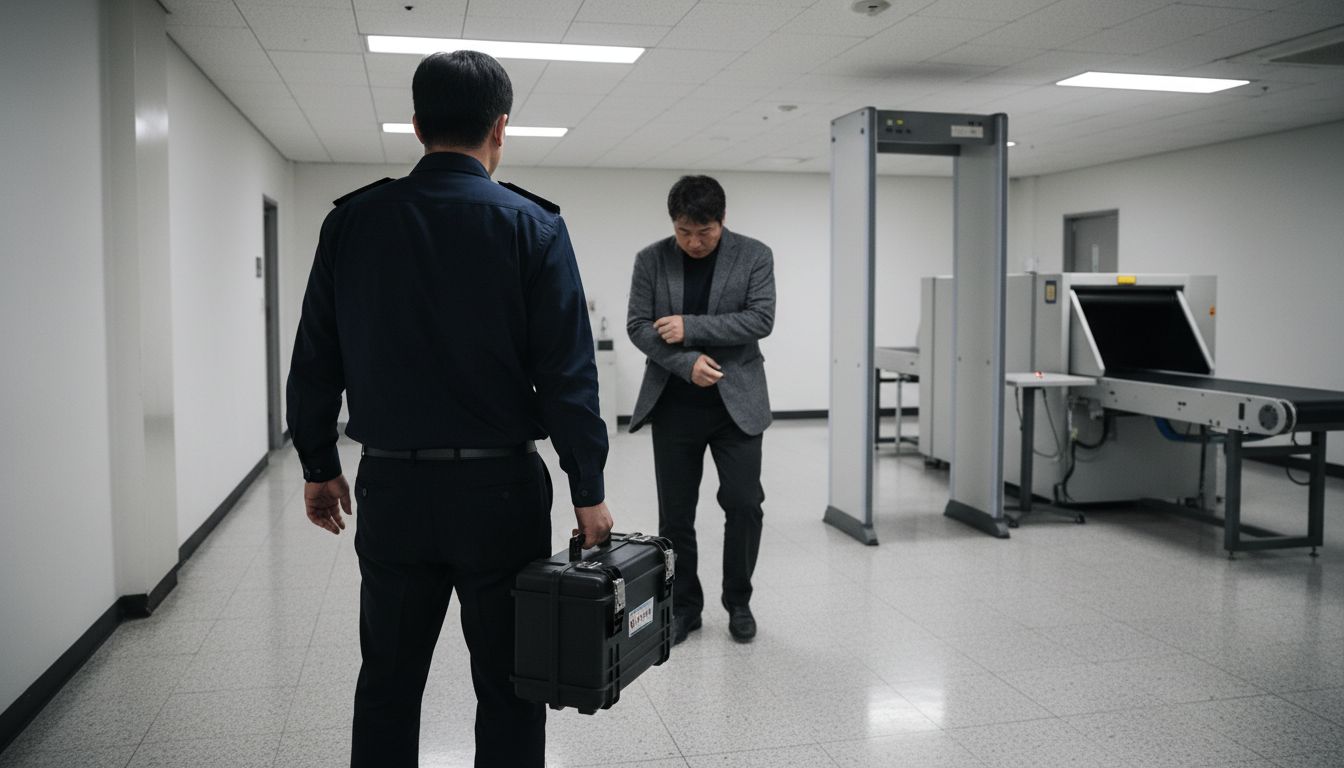
In the paperwork filed with South Korean banks, the money looked innocent enough. It was listed as payments for tuition fees and cosmetic surgery bills—standard expenses for people living their lives or sending their kids abroad. But the students didn’t exist, and the surgeries never happened. Instead, those labels were just stickers slapped onto a massive, invisible pipeline moving millions of dollars across borders without anyone noticing—until the customs agents looked closer at the receipts.
- $101.7 million laundered over nearly four years.
- Operation ran from September 2021 through June 2025.
- KCS caught a sophisticated ring involving three individuals.

South Korean customs investigators have officially pulled the plug on this operation. On Monday, the Korea Customs Service (KCS) announced they had caught a group of three individuals running a sophisticated money laundering ring. Over nearly four years, this group allegedly moved a staggering 148.9 billion won—that is about $101.7 million—using little more than cryptocurrency and a clever set of lies.
The Modern Smugglers
When we think of smuggling, we usually picture speedboats at midnight or hidden compartments in suitcases. But modern smuggling often happens in broad daylight, on a laptop screen. The group in question is accused of violating the Foreign Exchange Transactions Act. This is the rulebook that South Korea uses to keep track of money entering and leaving the country.
Here is how the scheme allegedly worked. The suspects operated from September 2021 all the way through June 2025. They didn’t move stacks of cash in duffel bags. Instead, they bought cryptocurrency in other countries. Think of this like buying a digital gold bar in New York.


Once they had the digital assets, they transferred them to crypto wallets inside South Korea. A crypto wallet is like a digital email inbox for money; you can send funds to it from anywhere in the world instantly. Once the crypto arrived in Korea, they sold it for local currency (won).
But here is the tricky part. You can’t just walk into a bank with $100 million in cash without raising eyebrows. So, the investigators say the group dispersed the funds through numerous bank accounts. They broke the money down into smaller chunks to avoid tripping the alarms that banks use to spot suspicious activity.
The “Plastic Surgery” Defense
To make these transfers look legal, you need a cover story. If a bank asks why you are receiving or moving this money, you have to tell them something believable.
This group allegedly chose “cosmetic surgery” and “tuition” as their excuses. These are perfect lies for a few reasons. First, they are high-ticket items. Nobody questions a bill for thousands of dollars if it is for a university semester or a medical procedure. Second, they are personal and private, which often discourages bank clerks from asking too many prying questions.
By labeling the money as legitimate expenses, they were able to wash the funds. Money laundering is essentially taking “dirty” money (money you want to hide or move illegally) and running it through a process that makes it look “clean” (like a tuition payment). By the time it comes out the other end, it looks like regular commerce.
The $290 Billion Mystery
This bust is not happening in a vacuum. It is part of a much larger headache for the South Korean government. The authorities are currently staring at a massive hole in their accounting books, and they are trying to figure out where the money went.
The Korea Customs Service recently pointed out a widening gap in the country’s foreign exchange flows. To understand this, imagine a supermarket. If the checkout registers say they sold $1,000 worth of apples, but the inventory manager says $5,000 worth of apples left the store, you have a problem. You have a gap that suggests theft or unreported sales.
South Korea has a similar problem on a national scale. The gap between the trade proceeds handled by banks and the actual value of goods reported to customs hit roughly $290 billion in 2025. That is the largest difference in five years. When the numbers don’t add up like that, it usually means money is moving in ways the government can’t see—often through illegal capital flight or money laundering.
This $101.7 million bust is just one piece of that very large puzzle. The KCS has announced they are launching “intensive inspections” all year round. They are specifically targeting underground money exchange operations that mess with the stability of the exchange rate.
Why Crypto is the Vehicle of Choice
You might wonder why these groups use cryptocurrency instead of regular bank transfers. The answer comes down to speed and control.
Traditional banking is like sending a letter through the post office. It goes through sorting centers, gets stamped by different people, and takes days to arrive. If the postmaster (the bank) doesn’t like the look of the envelope, they can stop it.
Cryptocurrency is more like sending a text message. It is fast, it works 24/7, and it doesn’t care about borders. For people trying to move money secretly, this is a major advantage. However, there is a catch. The “blockchain”—the technology that records crypto transactions—is like a shared Google Doc that everyone can read but nobody can delete. Every transaction leaves a permanent digital footprint.
While the criminals might have thought they were invisible, the digital trail they left behind likely helped investigators connect the dots between the foreign purchases, the Korean wallets, and the bank accounts.
A Massive Market Under the Microscope
This crackdown lands right in the middle of a booming crypto scene in South Korea. The country has a reputation for being incredibly tech-savvy, and its citizens have embraced digital assets with enthusiasm.
According to data from the Financial Services Commission, the crypto market in South Korea is huge. As of June 2025, the market capitalization—the total value of all crypto held there—reached 95 trillion won. That is about $64.6 billion. On an average day, people are trading around $4.35 billion worth of these assets.
With that much money flying around, it is a busy environment for regulators. The government is trying to strike a difficult balance. They want to allow people to trade and invest, but they also need to stop bad actors from using the system to hide criminal proceeds or dodge taxes.
What Happens Next?
The three individuals involved in this specific case have been referred to prosecutors. This means the investigation is over, and the legal battle begins. If convicted under the Foreign Exchange Transactions Act, they could face serious penalties.
But the story doesn’t end with them. The KCS has made it clear that this is just the beginning of a tougher approach. In a separate inspection targeting a specific industry earlier in 2025, they found that 97% of the companies they surveyed were involved in some kind of illicit transaction. That probe alone uncovered 2.2 trillion won in shady dealings.
For the average person, this news is a reminder that the “Wild West” days of cryptocurrency are fading. Governments are buying better software, hiring more experts, and learning how to track digital money just as well as they track physical cash. The days of hiding millions behind a fake tuition bill are coming to a close.